
The Desertas Islands are a remote, uninhabited group of rugged volcanic islands southeast of Madeira in the Atlantic Ocean. Characterized by steep cliffs, barren slopes, and dramatic rock formations, they present a stark, wild landscape shaped by wind and sea.

On the remote Desertas Islands, there are striking examples of stone stairs carved directly into sheer cliff walls, leading to small shelters and dwellings set within natural caves. These precarious stairways cling to the rock face, rising above the Atlantic with no railings, reflecting the ingenuity once required to survive in this harsh, isolated environment.
The cave houses—simple, stone-fronted spaces built into hollows in the volcanic rock—were historically used by shepherds, fishermen, or wardens, offering protection from wind and sea spray while remaining nearly invisible from the water below.

The Desertas Islands are defined by towering, sheer cliff walls that plunge straight into the Atlantic Ocean. Formed from dark volcanic rock, these cliffs rise hundreds of meters, their faces scarred by fissures, ledges, and erosion from constant wind and waves. The scale and verticality create a powerful, almost forbidding presence.

The Desertas Islands present a tortured, otherworldly landscape that feels closer to Mars than to the lush greenery of nearby Madeira.
There is little sign of life on land, reinforcing the sense of desolation and isolation. This harsh, sculpted environment—formed by volcanic eruptions and centuries of erosion—gives the Desertas a dramatic, alien beauty, making them one of Portugal’s most extreme and visually striking landscapes.

The Desertas Islands are fringed with wild, dramatic sea caves carved into towering volcanic cliffs by centuries of Atlantic waves. These caves open directly at water level, their dark mouths cut into sheer rock walls, where the sea surges and echoes deep inside. Formed from hardened lava flows and fractured basalt, the caves feature arched entrances, jagged ceilings, and narrow passages, often glowing with reflected blue light from the ocean outside.

Porto Moniz is surrounded by steep cliffs and lush, green mountains, typical of Madeira’s volcanic terrain, and the area is part of the Madeira Natural Park, offering scenic hiking trails along the coast and into the Laurisilva forests.

Swimming in the natural pools of Porto Moniz is a truly unique experience, blending the thrill of the Atlantic Ocean with the safety and calm of sheltered volcanic formations. The pools are carved from black lava rock, forming smooth basins that fill with crystal-clear seawater at high tide. As you step in, the water is cool and refreshing, often with gentle waves lapping over the rocks, creating a soothing rhythm.

Madeira has embraced modern wind power as part of its renewable energy strategy, installing wind turbine farms across elevated ridges and coastal slopes to harness the strong, consistent Atlantic winds.

The turbines generate clean electricity, contributing significantly to the island’s energy supply and reducing dependence on imported fossil fuels. Many of the wind farms are integrated into the island’s rugged volcanic terrain, creating a striking contrast between the sleek, modern structures and the traditional green hills or rocky cliffs below. Madeira’s wind farms illustrate the island’s commitment to sustainable energy while respecting its unique landscape, blending technology with natural beauty.

Seixal is a charming coastal town located on the northern coast of Madeira Island in Portugal. Nestled between steep volcanic cliffs and the Atlantic Ocean, it is known for its natural beauty, rugged coastline, and black sand beaches, such as Praia do Seixal. The surrounding hills are lush and green, dotted with small farms, terraced fields, and waterfalls that cascade down the cliffs into the sea.

São Vicente is a picturesque town and parish located on the northern coast of Madeira Island. Nestled between steep volcanic cliffs and the Atlantic Ocean, it is known for its dramatic landscapes, lush greenery, and traditional Madeiran charm. The town features narrow streets, whitewashed houses with tiled roofs, and a calm, small-village atmosphere.

In the town of São Vicente on Madeira Island, the bell clock tower is one of the town’s most prominent landmarks. Typically attached to the local parish church, the tower features a whitewashed facade, tiled roof, and a clock face visible from the main streets, with bells that mark the hours for the community.

On São Jorge Island in the Azores, fishermen have long practiced the dramatic tradition of lowering small fishing boats down steep cliffs into the Atlantic. With much of the island defined by towering coastal escarpments and isolated fajãsfar below, boats are carefully hoisted and lowered using ropes, winches, and wooden frames anchored at the cliff top.

The Porto Santo Line operates the main passenger ferry linking Madeira and Porto Santo. Its modern high-speed vessel, the Lobo Marinho, provides a comfortable Atlantic crossing with indoor lounges, outdoor decks, and panoramic sea views. The ferry is a vital transport link for residents and visitors, offering a scenic journey between Madeira’s rugged coastline and Porto Santo’s long sandy beaches, while also carrying limited cargo and vehicles on select sailings.

The Valley of the Nuns is a dramatic, secluded valley hidden deep within the mountains of Madeira. Surrounded by towering, near-vertical volcanic cliffs, the valley feels completely enclosed and remote, accessible only by winding mountain roads. At its center lies the small village of Nuns’ Valley, nestled among terraced fields and chestnut groves.

Pico do Arieiro is one of the highest peaks on Madeira, rising to 1,818 meters (5,965 feet) above sea level. Accessible by road, it offers some of the most dramatic views on the island, with jagged volcanic ridges, deep valleys, and seas of clouds stretching below. The summit is often above the cloud layer, creating a surreal landscape of sharp peaks emerging into blue sky.

At the summit of Pico do Arieiro a narrow mountain road climbs through rugged volcanic terrain to one of the island’s highest accessible points. The roadway ends at a small plateau with parking areas, viewpoints, and a handful of functional buildings, including a radar station, meteorological structures, and a modest café/visitor facility.

Machico is a historic town located on the northeastern coast of Madeira Island, known for its sandy beaches, natural harbor, and cultural heritage. It is one of the first places settled by the Portuguese in Madeira and played a key role in the island’s early history. The town features narrow streets, traditional houses, and a central waterfront, with restaurants and cafes overlooking the Atlantic Ocean.

Visitors can sunbathe on the beach, take leisurely swims in the Atlantic, or enjoy water sports in the calm bay. Along the beachfront, there are cafés and small restaurants where people can sip coffee, enjoy local snacks, or watch the sun glint on the water.

The Garajau coastline features rocky shores, natural swimming spots, and a small marine reserve, making it popular for snorkeling, diving, and sightseeing. The surrounding cliffs provide panoramic views of the ocean and nearby hills, while small paths and stairways allow visitors to access the water and enjoy the natural environment.

Funchal is the vibrant capital city of Madeira Island, located on the southern coast. Nestled between steep hills and the Atlantic Ocean, it is known for its picturesque harbor, historic streets, and lush botanical gardens. The city features a mix of colorful colonial architecture, modern hotels, and lively markets, such as the famous Mercado dos Lavradores, where locals sell fresh produce, flowers, and fish.

In Funchal, Madeira, several luxury resorts are perched atop dramatic coastal cliffs, offering breathtaking views of the Atlantic Ocean. Combined with spa facilities, fine dining, and direct access to scenic walking paths, these resorts offer a luxurious and visually spectacular experience that highlights Madeira’s unique topography and coastal beauty.

The Igreja de Nossa Senhora do Monte is a historic church located in the hillside village of Monte, just above Funchal on Madeira Island. Built in 1741, it is renowned as the final resting place of Emperor Charles I of Austria, whose tomb is a site of pilgrimage. The church features whitewashed walls, Baroque-style altars, and a simple yet elegant interior, reflecting traditional Madeiran ecclesiastical architecture.

The Fortaleza do Pico (also known as the Old Fort of Funchal) is a historic coastal fortification built in the early 17th century to defend the city against pirates and enemy attacks. Constructed from stone and volcanic rock, it features thick walls, bastions, and cannon emplacements overlooking the Atlantic Ocean and the harbor.

The Funchal coastline is lined with a variety of luxury and boutique resorts that take full advantage of the dramatic Atlantic setting. Many of these properties are built on cliff tops or gently sloping hillsides, offering panoramic ocean views, direct access to waterfront promenades, and easy connections to the city’s historic center.

At Cabo Girão on Madeira, small villages and traditional farming cling to the dramatic slopes above and below the famous sea cliff. The landscape is shaped by steep terraces, carefully built from stone to create narrow strips of arable land on otherwise sheer terrain.

At Cabo Girão on Madeira, agriculture is defined by very small-scale farms, shaped by steep terrain and centuries of manual cultivation. The main crops grown include: bananas, grapes, sugar cane, potatoes, beans, cabbages, lettuce, onions and tomatoes.

The Farol de São Lourenço is located at the eastern tip of Madeira Island, on the rugged São Lourenço Peninsula. Situated on steep volcanic cliffs overlooking the Atlantic Ocean, it serves as a vital navigational aid for ships approaching the island.

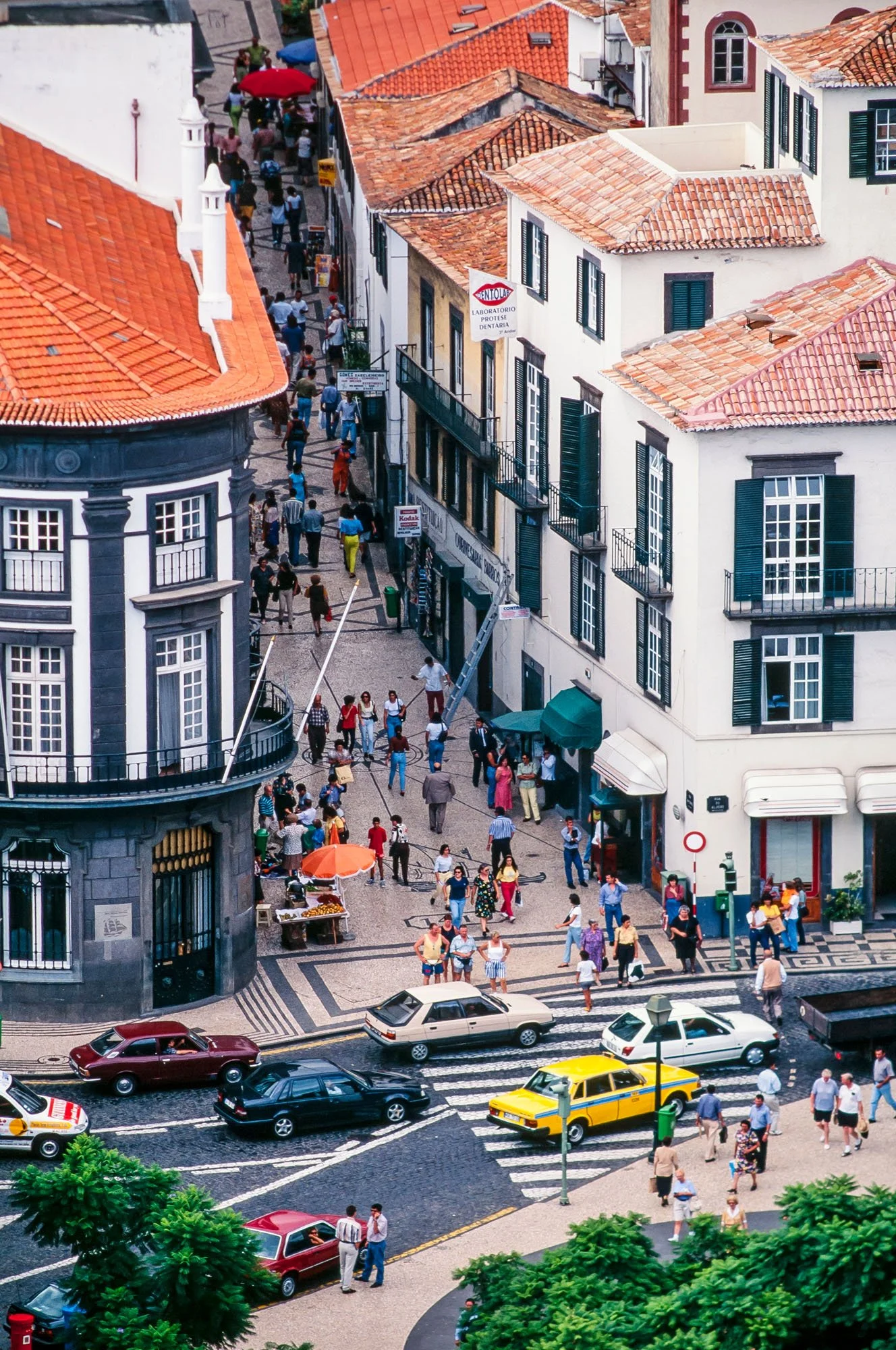
Funchal is the capital city of Madeira Island, located on the southern coast, known for its picturesque harbor, historic center, and lush surroundings. Nestled between steep volcanic hills and the Atlantic Ocean, the city blends colonial architecture with modern amenities, featuring narrow cobblestone streets, colorful buildings, and vibrant markets like the Mercado dos Lavradores.

The downtown core of Funchal is a lively area that reflects the city’s historic and commercial heritage. Narrow, cobbled streets wind between colonial-era buildings, colorful facades, and small plazas, creating a charming urban atmosphere. Cafés, boutiques, and restaurants line the streets, making the downtown area a hub for both locals and visitors.

Along Funchal’s waterfront on Madeira Island, several cafés, bars, and restaurants line the coast near small beaches and the marina. Many of these establishments offer terraces with ocean views, letting visitors enjoy fresh seafood, local Madeira dishes, and drinks while listening to the gentle sound of waves.
The streets are often lined with cafés and small restaurants, providing places to rest and enjoy local pastries or coffee. Many alleys feature decorative street art, flower displays, and traditional architecture, giving the shopping experience a distinctly Madeiran character.

The Harbour of Funchal on Madeira Island is not only a hub for commercial and fishing vessels but also a popular spot for recreational boating. Numerous yachts, sailboats, and small motorboats are moored in the marina, often used for day trips, fishing excursions, whale-watching tours, and sailing adventures along the southern coast.

The harbour’s layout separates recreational, passenger, and commercial areas, ensuring smooth operations despite the variety of vessels. From the waterfront, visitors can watch the impressive liners moored alongside smaller cargo ships, with the dramatic backdrop of hills, cliffs, and city buildings creating a striking maritime scene. This combination highlights Funchal’s importance as both a tourism gateway and logistical center in the Atlantic.

The Pico Fort is a historic 17th-century fortress located on the southern coast of Funchal, Madeira. It was originally built to defend the city and its harbor against pirate raids and naval attacks, forming part of Madeira’s network of coastal defenses. Constructed from volcanic stone, the fort features thick walls, bastions, and artillery positions overlooking the Atlantic Ocean.

Funchal, Madeira’s capital, is home to many cliff‑top and waterfront resorts that feature swimming pools with ocean views, lush gardens, and luxury amenities. These resorts take advantage of the city’s dramatic volcanic landscape and Atlantic backdrop, creating relaxing environments that blend coastal scenery with upscale comfort.

Fort São Tiago is a historic 17th‑century fortress located at the western edge of Funchal’s old town, overlooking the Atlantic Ocean. Built to defend the city against pirates and naval attacks, it features yellow ochre walls, battlements, and a cannon-lined facade facing the sea. Its strategic position at the mouth of the bay allowed defenders to control access to Funchal’s harbor.

In Funchal, there are several public and municipal swimming pool complexes located along the coast, offering safe, family-friendly alternatives to open-ocean swimming. Many are situated near the waterfront or small beaches, combining access to the sea with poolside amenities.

In Funchal, Madeira, the city’s mountainous terrain and deep river valleys have necessitated the construction of several bridges spanning canyons and ravines. These bridges connect urban neighborhoods, main roads, and highways, allowing smooth access across the island’s rugged volcanic landscape.

The Cristo Rei statue at Garajau, on the southeastern coast of Madeira, is a striking 14-meter tall figure of Christ overlooking the Atlantic Ocean from the cliffs above Garajau Bay. Erected in 1927, it was inspired by the famous Christ the Redeemer statue in Rio de Janeiro and was built to thank God for protecting Madeira’s fishermen.

Porto Santo Island, part of the Madeira archipelago, is best known for its long golden-sand beaches and laid-back resort atmosphere. The island’s coastline is dominated by its signature stretch of sand—Praia do Porto Santo—which runs for roughly 9 km (about 5½ miles) and is regarded as one of Portugal’s most spectacular beach settings.

Porto Santo’s beaches and resorts combine tranquil seaside living with resort comforts—a peaceful destination for sunbathing, swimming, family getaways, and long coastal strolls. The island’s warm climate and broad sandy shores make it stand out in Portugal as a classic beach escape with a relaxed, welcoming vibe.

On the beach the experience is calm, spacious, and deeply relaxing. The Atlantic here is usually gentle, with clear, shallow water near the shore that’s ideal for swimming. Waves roll in softly, creating a soothing background sound rather than strong surf. The air feels dry, clean, and sunny, with steady breezes that keep the heat comfortable.

Santa Cruz is a relaxed coastal town on the eastern side of Madeira, known for its seafront promenade, pebble beaches, and traditional Madeiran character. The town centers around a small historic core with a parish church, palm-lined streets, cafés, and local shops, giving it an easygoing, lived-in feel.

Open to the Atlantic, the beach feels spacious and uncrowded, with constant sea breezes and the sound of waves rolling onto shore.

The beaches of Santa Cruz on Madeira’s eastern coast are lined with dark volcanic stones, a signature feature of the island’s volcanic geology. These stones range from small, smooth pebbles to larger jagged rocks and form the majority of the shoreline, giving the beach a dramatic, rugged appearance.